

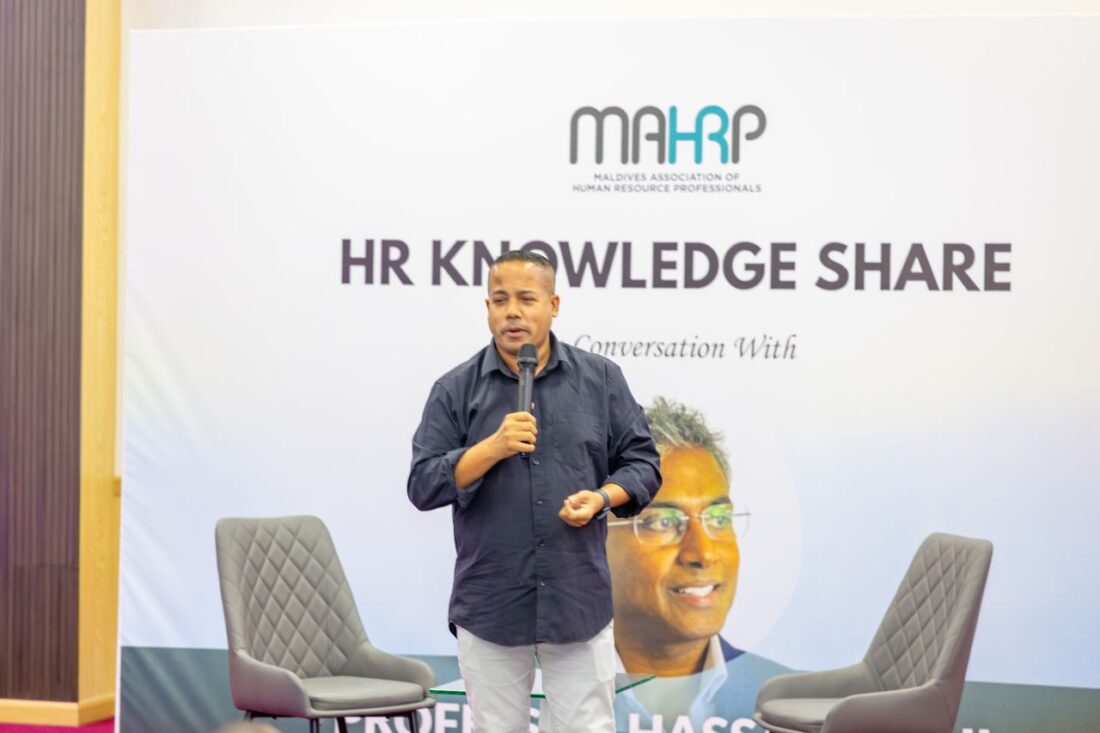
Afeef Hussain Explores the Future of Work at MAHRP Knowledge Sharing Session on AI and Human Potential
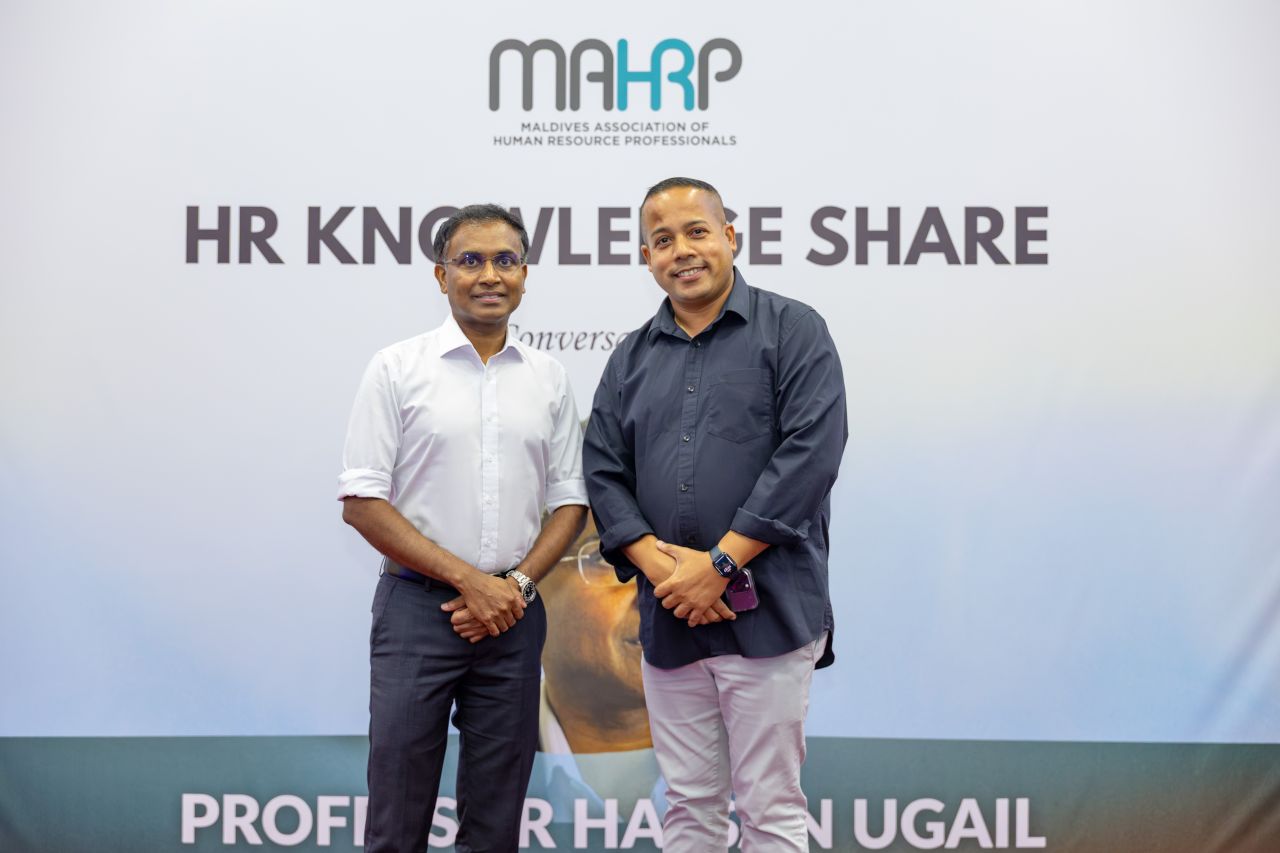
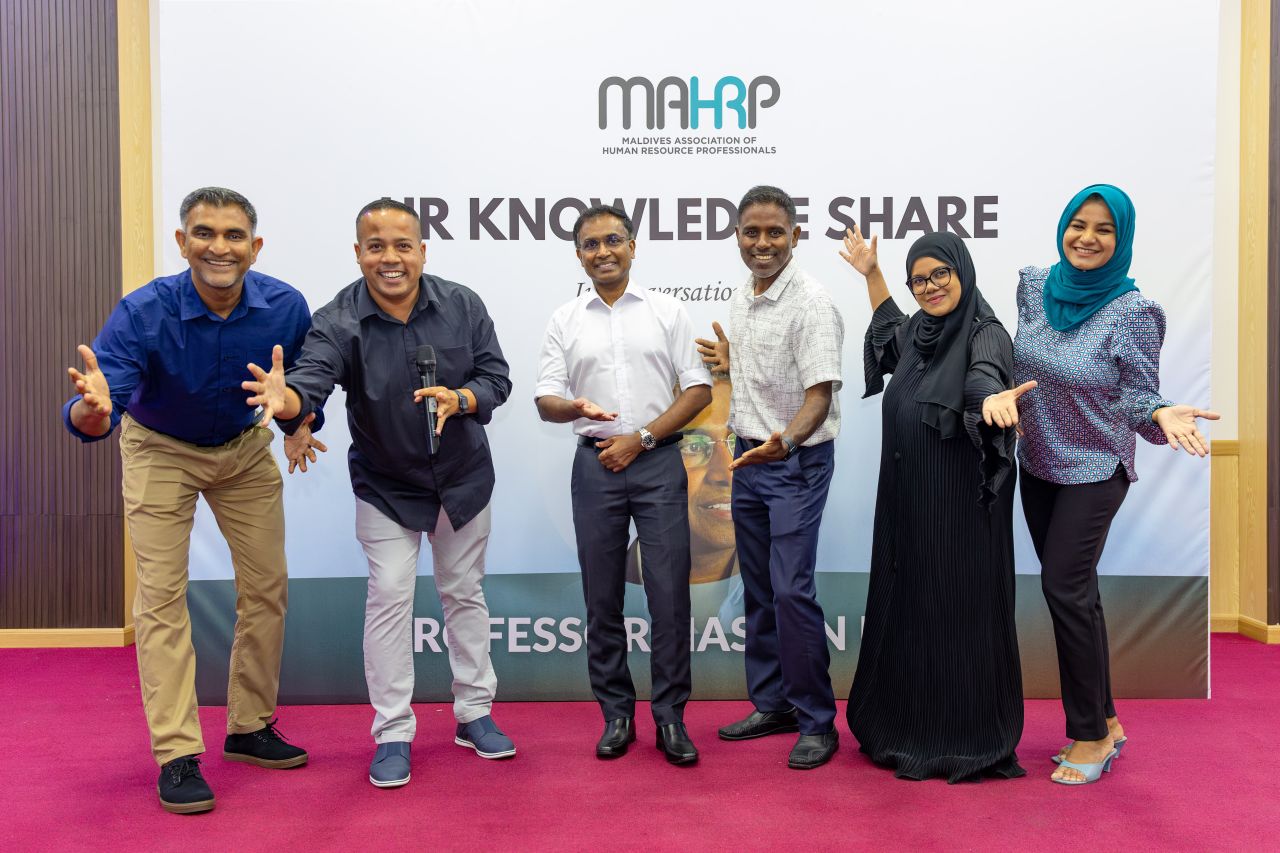
Maldives | February 2026 – Afeef Hussain, international keynote speaker, executive coach and hospitality leader, attended a Maldives Association of HR Professionals (MAHRP) knowledge-sharing session featuring Professor Hassan Ugail on the future of work, exploring the relationship between technology, artificial intelligence and human potential.
Titled “The Future of Work: High Tech, High Touch, Human Potential,” the session examined how AI, automation and technological advancements are transforming workplaces and reshaping the skills professionals need to succeed in an increasingly digital economy.
A central message from the session was that technology alone will not determine the future of employment. Instead, professionals who can effectively use technology while demonstrating critical thinking, sound judgement, curiosity and adaptability will be better positioned to thrive.
As AI and automation take over repetitive tasks, uniquely human capabilities are becoming increasingly important. The workplace is shifting from traditional job titles towards problem-solving, from qualifications towards learning agility, and from working harder towards working more intelligently with technology.
Ten Key Takeaways on the Future of Work
Reflecting on the session, Afeef highlighted ten insights for professionals, leaders and organisations navigating technological change.
1. Disruption Drives Innovation
Significant breakthroughs often emerge when individuals and organisations are challenged to rethink established approaches and explore new possibilities.
2. Attention Is a Valuable Resource
In an increasingly connected world, organisations must compete for people’s attention before they can earn their engagement and business.
3. AI Skills Will Shape Career Opportunities
Understanding how to use AI effectively is becoming an important professional advantage as technology transforms the nature of work.
4. Human Judgement Remains Essential
AI can automate tasks and support decision-making, but human judgement, critical evaluation and accountability remain crucial.
5. Careers Require Continuous Evolution
As industries change, professionals must continuously update their knowledge, develop new capabilities and remain open to different opportunities.
6. Critical Thinking Is Increasingly Important
The ability to question assumptions, evaluate information and solve complex problems is becoming essential in a technology-driven workplace.
7. Human Skills Matter More Than Ever
Empathy, communication, emotional intelligence and relationship-building remain fundamental to effective leadership and collaboration.
8. Sustained Motivation Drives Achievement
Long-term success requires consistent effort, discipline and commitment beyond the initial excitement of inspiration.
9. Education Must Encourage Curiosity
Learning must move beyond memorisation towards questioning, exploration and understanding why and how things work.
10. Knowledge Will Define Competitive Advantage
Future leaders must invest in building knowledge and intellectual capital, recognising that organisational success depends on more than business growth alone.
Building a Human-Centred Future of Work
The session reinforced an important principle: the future of work is not about choosing between people and technology. It is about equipping people to work effectively with technology while strengthening the human capabilities that drive innovation, collaboration and responsible decision-making.
For Afeef, the discussion highlights the importance of continuous learning and adaptive leadership in helping individuals and organisations prepare for a rapidly changing professional landscape.
He also expressed his appreciation to Professor Hassan Ugail for his insights and inspiration during the session.
As organisations embrace AI and automation, the ability to combine technological capability with human potential will be critical to building resilient teams, developing future-ready leaders and creating sustainable workplace success.