


Crisis Is Not a Question of If. It Is a Question of When; Leadership in Times of Crisis
Many people think a crisis is a matter of if. The reality is that it is never a question of if—it is always a question of when.
Over the past few decades, humanity has faced numerous disruptions that have tested organizations, economies, and leaders. From the 2008 global financial crisis, to the travel shutdown following the September 11 attacks in the United States, to health emergencies such as SARS, MERS, and most recently the COVID-19 pandemic, crises have repeatedly reshaped industries and societies.
These events remind us of one thing: moments of disruption—whether economic downturns, geopolitical tensions, technological shifts, or sudden market shocks—are inevitable in today’s world.
The real test of leadership is not whether a crisis can be avoided, but how leaders prepare their people, organizations, nations, and communities before it arrives—and how they guide them through it when it does.
I have seen this in real time. I have been in decision-making rooms where crises were unfolding, yet some leaders remained in a “wait and see” mindset. Others, however, made bold decisions. Those who acted decisively often stood firm during the crisis and emerged even stronger afterward.
Looking back at global events—from the 2008 financial crisis to the COVID-19 pandemic and the disruptions across the aviation, travel, and hospitality industries—certain leadership lessons consistently appear in the playbook of those who navigate crises effectively.
Here are ten lessons I have learned from great leaders on managing crisis.
1. See the Storm Before It Arrives
Great leaders anticipate risks before they fully materialize.
I remember a conversation in December 2019 when news of a virus outbreak was emerging. I told a senior leader in our organization that we might have to close all our resorts within a few months. He challenged the idea, saying, “It won’t happen. This will pass.”
Yet by March 2020, borders closed and almost every resort in the Maldives had shut down.
Anticipation is a critical leadership skill. The best leaders are rarely surprised by crises. They may not know exactly when disruption will occur, but they are always preparing for uncertainty.
2. Communicate Early, Clearly, and Honestly
When uncertainty increases, employees naturally look to leadership for clarity.
One example that stood out to me was how the governments of Dubai and Abu Dhabi communicated clearly and consistently during the early stages of the current crisis developing in the Middle East. Their transparent safety protocols and coordinated messaging helped maintain stability daily as the cities are run safely and soundly as much as they can.
Another powerful example was Arne Sorenson, the late CEO, safely and soundly of Marriott International. In March 2020, he addressed employees directly through a video message, openly acknowledging the gravity of the situation and reaffirming his commitment to employees and customers.
Leaders may not always have all the answers—but communication must be frequent, transparent, calm, and directional. Clear communication during crisis reduces anxiety and builds trust.
3. Put People First
Your people are the reason you have a job.
Great leaders protect the safety, wellbeing, and dignity of their teams—especially during difficult moments.
A powerful example came in 2020 when Brian Chesky, CEO of Airbnb, had to make the difficult decision to reduce the company’s workforce. His message to employees was delivered with empathy and respect. The company provided generous severance packages, extended healthcare, and even support in helping affected employees find new opportunities.
During a crisis, people may forget the exact details of what happened—but they will never forget how their leaders treated them.
4. Protect Your Customers
While maintaining internal stability, leaders must also safeguard customer trust.
A recent example was when the Abu Dhabi government coordinated hotels to house stranded passengers during major flight disruptions, ensuring travelers were cared for while the situation was resolved.
I also remember an experience during my time at Atlantis The Palm, Dubai. The resort opened during Eid Al-Fitr in 2008, fully booked. The following morning, the hotel faced a major water shortage due to a technical issue—Palm Jumeirah was still new infrastructure at the time.
Guests were understandably upset.
Although water supply was restored by midday, the leadership team made a bold decision: every guest received two complimentary nights for a future stay.
That decision turned a potential reputation disaster into a long-term trust builder. Today Atlantis remains one of the most successful resorts in the region.
Organizations that protect customers during crises often gain lifelong loyalty.

5. Simplify Decision Making
Crises create complexity. Great leaders respond by creating clarity.
Three simple questions help guide decisions during difficult times:
- What must continue?
- What must stop?
- What must change?
During major crises—whether economic downturns, geopolitical conflicts, or pandemics—the aviation industry often simplifies operations: grounding parts of fleets and focusing on essential routes.
I remember during the pandemic when I was the caretaker General Manager at LUX* South Ari Atoll, our COO Dominik Ruhl constantly reminded us of one priority: people.
If a team member tested positive for the virus, the instruction was simple—no debate, no hesitation. Immediately isolate them in a guest villa and provide the best possible care.
Whenever Dominik called from Mauritius, his first question was always the same:
“How are our people doing?”
The numbers came after the people. That is true leadership.
6. Empower Teams to Act
Crisis management cannot be centralized entirely at the top.
Leaders who successfully navigate disruption empower those closest to the problem to act.
The UAE provides a strong example of this approach. Government agencies operate with clear roles and responsibilities, enabling rapid response across both the public and private sectors.
The best solutions often come from those on the front lines. A leader’s role is to guide, support, and remove obstacles—not control every decision.
7. Protect Cash, Capability, and Culture
Every crisis places pressure on three critical pillars:
Cash – Financial stability Capability – Operational ability Culture – Employee morale and unity
After the 2008 financial crisis, many companies focused heavily on financial survival but neglected organizational culture. The result was disengaged employees and slower recovery.
Surviving a crisis is not just about financial endurance—it is also about human resilience.
8. Adapt Quickly
In a crisis, the speed at which leaders adapt often determines the outcome.
The worst mindset during uncertainty is “wait and see.”
Markets shift quickly. Conditions evolve daily. Leaders must remain flexible and responsive.
Adaptability is not weakness—it is a strategic advantage.
9. Maintain Calm and Confidence
Leadership during crisis is not only strategic—it is psychological.
Employees often mirror the emotional state of their leaders. If leaders panic, fear spreads rapidly.
Confidence from leadership does not eliminate the crisis, but it gives teams the courage to navigate it together.
10. Turn Crisis into Learning
Every crisis carries lessons.
Organizations that emerge stronger treat crises not just as threats, but as opportunities to improve.
After major disruptions, effective leaders ask:
- What did we learn?
- What systems must improve?
- How do we prepare better for the future?
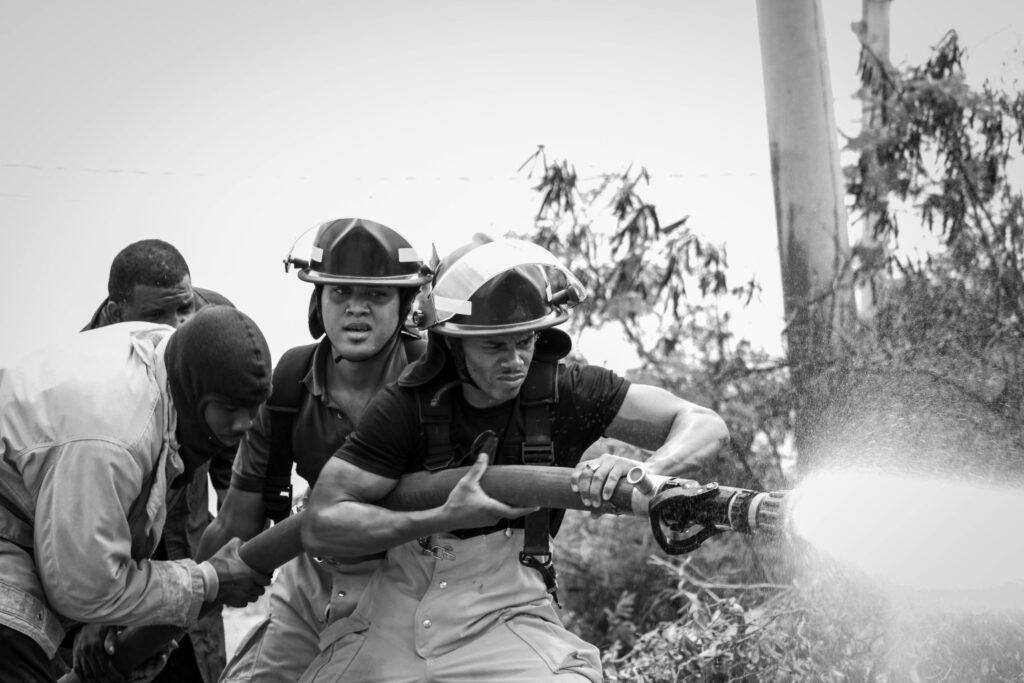
When studied carefully, crisis becomes one of the most powerful teachers.
reat leaders prepare their people before a crisis, stand beside them during the crisis, and grow with them after the crisis.
Because ultimately, organizations do not overcome crises through strategy alone.
They overcome them through people—people who trust their leaders, support one another, and remain committed to the mission even during the most difficult times.
And that is what separates organizations that merely survive…
from those that emerge stronger than before.